


Around The League // Champions
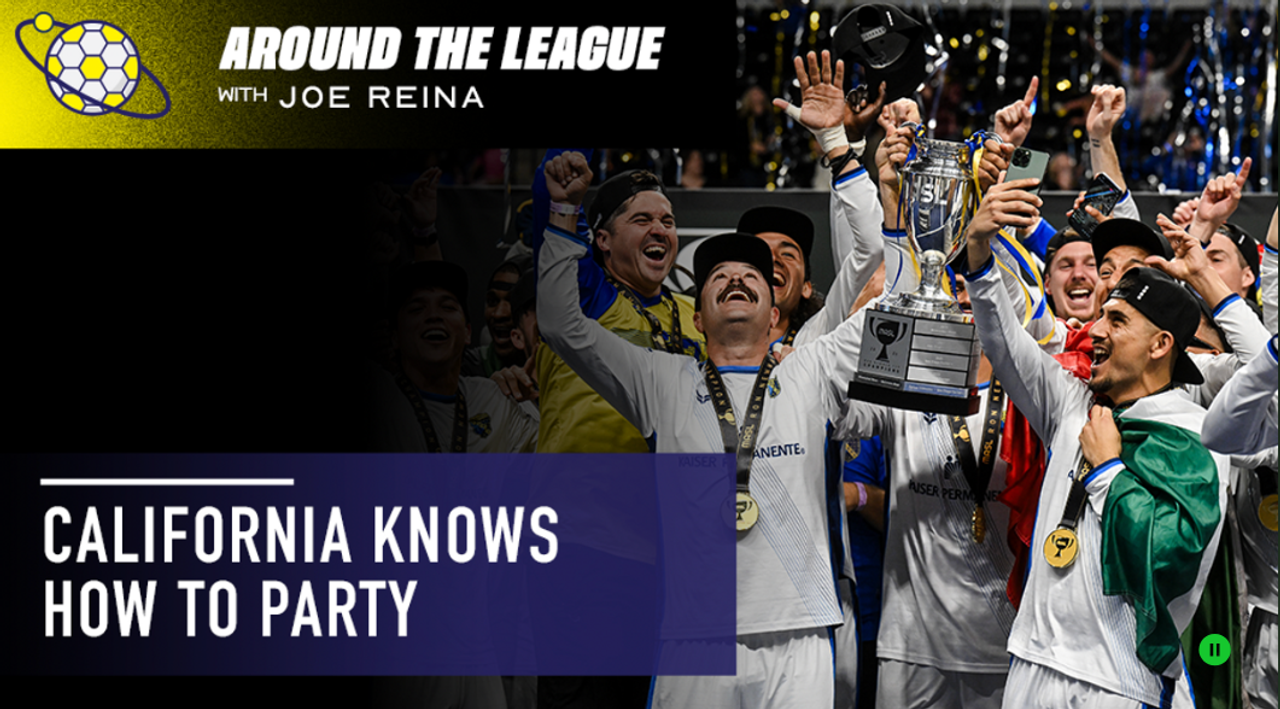
The Ron Newman Cup is taking residence with the San Diego Sockers following a dominant game three triumph over the Milwaukee Wave. In clinching the team’s 17th championship, and third in the MASL, the Sockers proved themselves to be fully deserving champions on the back of an impressive 10-3 win.
After splitting the first two games of the series, San Diego went with a new tactical approach in game three. The Sockers opted to press the Wave high, preventing them from advancing the ball with ease and forcing their defenders into costly errors. San Diego’s first goal, courtesy of Sebastian Mendez, came by way of high pressure and a quick shot from distance.
That goal immediately changed the flow of the game. From there, the Sockers dropped off and forced the visitors to break them down with five players behind the ball. Though Milwaukee’s Mario Alvarez equalized with an exquisite strike from behind the yellow line, it underscored the lack of dangerous chances Milwaukee created during 5v5 possession. San Diego’s defense was superb, preventing the Wave from getting any good looks in and around the penalty area.
In an instant, Drew Ruggles found the net thanks to an incisive through-ball assist from Charlie Gonzalez, and Milwaukee realized the gravity of the situation. “Score now or forever hold your peace.” The Sockers led 2-1 after 10 minutes, but instead of Milwaukee pushing forward and dominating possession, San Diego grabbed the reins.
The hosts continued to pressure Milwaukee, making life difficult, and eventually found a third goal after a Leo De Oliveira restart. As a result, the Wave became more desperate, and San Diego continued to pounce, throwing numbers forward and taking advantage of mismatches and poor defensive marking.
In the 15 minutes following Milwaukee’s equalizer, San Diego outshot the visitors 11-1 and scored six goals. Milwaukee’s typically dominant pulled-goalkeeper rotation couldn’t hold a candle to the Sockers, and after a full third-quarter’s worth of shots from behind the yellow line of near the boards without any goals, the result became a formality.
The result came on the back of an impressive Milwaukee display just three days prior. The Wave overturned a 2-0 deficit to win 7-2 in game two, spurred on by their superb man-down defending. Milwaukee was among the league’s best in that regard all season, but, of course, to defend in these situations, you need to lead them, and during the entirety of the playoffs, Milwaukee struggled immensely to find the attacking rhythm it had championed throughout the regular season.
The key to this struggle was two-fold: a worse-than-average defense and an overreliance on top attacking talent without the depth required to compete against the best of the best. Though the Wave managed to get through Empire and Baltimore, both teams laid the blueprint for stopping the Wave, which the Sockers followed perfectly and improved upon.
San Diego recognized the importance of pressing Milwaukee, something we saw plenty of during game one of the series. This tactic worked even better in game three because there was no runway; the Sockers knew Milwaukee needed to score, and punished them for it. Add in tired, frustrated legs and unfamiliar tactical endeavors, and you have a recipe for disaster for the losing team. This effect was also magnified by the Sockers' individual talent across the turf. Practically everyone played their part to perfection in game three.
Goalkeeper Chris Toth and his defenders controlled the routine moments and offered support going forward, with the quick transition becoming more of an option as the night went on. The Sockers' back line dropped off to prevent the Wave from transitioning with pace, something we saw during their semifinal series against St. Louis, too, and Cesar Cerda in particular was superb. His sweeper role worked time and time again, stopping any promising Milwaukee attack before it started.
Their midfielders and second forwards ran rampant, taking advantage of Milwaukee’s dysfunctional defense to be creative in all phases of play. Leo specifically enjoyed goal contributions from set pieces, transitional moments, and in possession. His assist to Mendez in the corner for San Diego’s 6th goal was spectacular and capped off an incredible series from the 37-year-old, culminating with the Finals MVP award.
Up top, “the league’s best targets,” according to head coach Phil Salvagio, lived up to the billing. Their hold-up play gave everyone time to make dangerous runs while threatening to turn and score. During game three, it was clear early on that Milwaukee’s target defenders had no answer for Tavoy Morgan’s brains and braun, and he punished them with a goal and two assists.
Outshooting your opponent is an art; it takes preparation, an understanding of where goals come from, and a talented cast of players capable of executing the game plan. The Sockers represent this trifecta perfectly, and their performance in game three is the culmination of their hard work and dedication to finding what works for this group.
Earlier this season, we discussed the team’s struggles, especially after losses to Empire, Milwaukee, and Tacoma. They hadn’t put all the pieces together with injuries to key players and an identity search that stretched into February. We knew this team’s potential, given the wealth of talent they possessed, but they just weren’t delivering.
Since the playoffs started and, truthfully, since the pair of regular-season series against the Comets in March, this group has looked incredible. The team bought in and became more than the sum of its parts, which says a lot. The expectations were high going into the year, and yet, San Diego exceeded them, winning both the MASL Shield and Ron Newman Cup. Winning is a skill, and the Sockers are certainly masters in their field.
For Milwaukee, it’s back to the drawing board after an impressive freshman campaign for head coach Marcio Leite. The former Wave player found success with his system and will look to strengthen the team he already has and support his talented swath of younger players. They reached the finals for the first time since 2019 and ended a three-year run of semifinal eliminations; something the entire organization, from the players up to the ownership, should be extremely proud of.
So what’s next for San Diego? Repeat? Three championships? The sky is truly the limit. Yes, they rely on experience, but their younger crop of superstars is more than capable of carrying the torch into the future and becoming Sockers legends who might one day have their own jerseys hung in the rafters. Don’t be surprised if they start a bit slow again next year and find their footing just in time to make another playoff run.
So with that, the 2025/26 MASL season comes to a close, and in a year with unparalleled parity, it’s fitting that the best team won both the Shield and the Cup. It was unpredictable all season long, and with the addition of Lehigh Valley next season, we’ll have a new home for indoor soccer to look forward to. Here’s to more of the same chaotic, beautiful indoor soccer in 2026/27.