


Around The League // Week 4
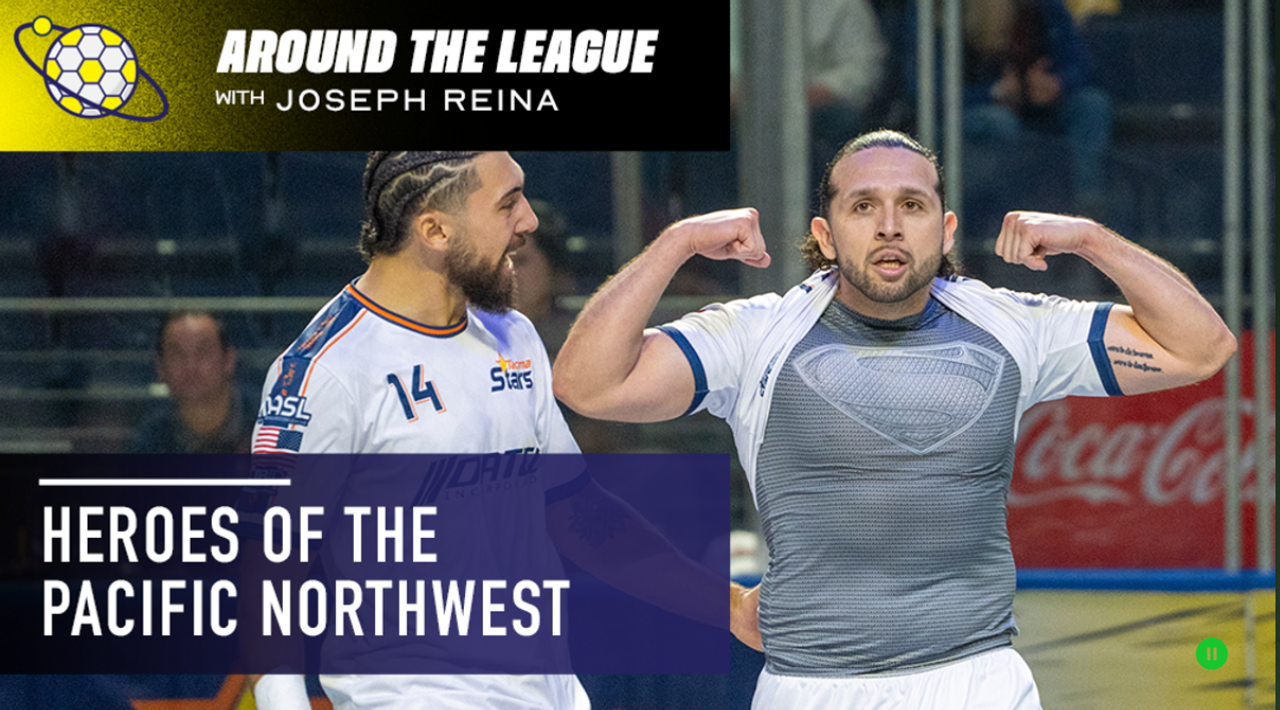
Tacoma is the league’s last undefeated team, just as everyone predicted, right? Welcome back to Around The League, your home for numbers and nuance from the past week of action in the Major Arena Soccer League. We’ve finally seen all eight teams hit the turf, but we’ll start in the Pacific Northwest with a pair of shock results that caught the league’s attention.
Tacoma Bests Baltimore Back-To-Back
Preseason expectations be damned, the Stars are undefeated. Hosting a weekend doubleheader against the high-flying Blast was always a tall order, but Tacoma proved they were up to the task with a pair of inspired performances that earned them all six points.
Game one was a slow, defensive battle as both teams felt each other out until the fourth quarter. Jamael Cox gave the Stars their first lead of the game with an outrageous free kick from nearly 60 feet away, a lead they would hold for just 46 seconds. The Blast answered back on the counter as forward 22-year-old Jairo Guevara bagged his first goal of the season to level the score.
As time ticked away, the two teams exchanged attacks, none of which truly tested either keeper, until Tacoma’s Micheal Ramos fired home a volley that ricocheted off a Baltimore defender and past Julian Rodriguez.
The goal proved decisive, as the Blast failed to mount any meaningful attacks late, thanks to Tacoma’s relentless defensive press and expert possession, which wasted much of the final five minutes. Baltimore put just three shots on target in this time, all of which came either from distance or extreme angles, and were easily corralled by Luis Birrueta in goal.
Game two opened up a bit more as both teams found the space that tired legs presented. Their respective pressing was much more situational in game two, and again, it proved vital to Tacoma’s success on the night. Aside from a poor defensive showing in the second quarter, Baltimore played a more consistent game and even led in the fourth period, but it all came apart with one possession.
With less than 150 seconds to play, the Blast’s would-be sixth goal was ruled out after Tacoma challenged for too many men on the field. Instead of trailing by a goal in the dying moments, the Stars had a power play, which they promptly converted to take a lead of their own. From there, the Blast again struggled to put together dangerous chances, even with the 6th attacker, and while Chad Poarch managed to get one back, Tacoma’s press earned them two empty-net goals to seal win number two.
It’s important to note that we shouldn’t put as much stock into the teams’ respective performances in game two as we should for game one. The lack of rest makes a huge difference for both teams and can dramatically impact how they approach their tactics for the second contest. We shouldn’t write them off entirely, either, because they are an important aspect of playing indoor soccer. Still, when we’re discussing legitimate takeaways about teams and tactics, the first games are far more indicative of overall performance.
For example, Tacoma pressed the Blast much more in game one, likely because they were dealing with tired legs of their own. Instead of maintaining the press from game one, the Stars pressed in very specific situations, like when they lost possession near Baltimore’s goal or on power plays.
When allowed to control play uncontested, the Stars were excellent, scoring six of their 11 goals as a result of long spells of possession. From a coach's perspective, their possession game worked, their special teams units converted well, and their situational pressing created open goal opportunities down the stretch. Next up for Tacoma is a West Coast showdown against the visiting Empire Strykers on Saturday, Dec. 20, at 9:05 PM EST.
For the Blast, this will serve as an early-season wakeup call, specifically regarding their ability to create shooting opportunities on the road. In game one, they put just 11 shots on target, with just eight of those testing Birrueta. Last season, the Blast took 12.167 fewer shots on the road than at home, and it appears that trend may continue into this campaign.
Game two was better in that respect, but it was also fundamentally a different style of play, given both teams’ lack of rest. There will be lessons to learn from both contests, but Blast head coach David Bascome will know his team needs to show the league they are a force to be reckoned with, both at home and on the road. They’ll have another opportunity to buck that trend before it begins in earnest when they travel to Milwaukee this Friday, Dec. 19, to face the Wave. Kickoff for that classic rivalry is set for 7:35 PM EST.
Positive and Negative Metrics
If I had to use just one word to describe the three games involving Milwaukee, Kansas City, St. Louis, and Utica this weekend, it would be “complicated”. The Wave won a second successive road game against one of the preseason favorites before a sluggish showing against the Ambush on Sunday. By contrast, the Comets struggled massively against the Wave at home, but put the hammer down on Utica. So with all this chaos and confusion, what can we learn about these four teams?
The Wave started strong on Friday when they put on a scoring clinic against the Comets. They took 40 shots on the night and scored nine goals, with six of their tallies coming from near the yellow line or along the boards; not your typical shot map in a high-scoring win. We’ve discussed the fact that Kansas City’s defense gives up a lot of shots, with most of those coming from difficult angles or long range, and against the Wave, this was no different, apart from the final score.
Milwaukee finished the game with a GPS (Goals Per Shot) of 0.225, practically identical to the league average of 0.223 from last season. When we compare that figure to the Comets' 2024/25 defensive GPS of 0.162, it suggests this was an aberration. Milwaukee’s shooting happened to be much more potent than the shots Kansas City typically faces, and as a result, the Wave scored a whopping nine goals to the Comets’ six.
The Comets system accepts the following negative, or counter-intuitive metric: more shots from less dangerous areas are better than fewer shots from more dangerous areas, and generally, that is the case. Sometimes, however, those “less dangerous” shots hit the back of the net more than you’d expect, as was the case against Milwaukee.
Does that mean the Comets should scrap their whole defensive setup and start over? Of course not! When you play the numbers game, sometimes the numbers don’t go your way; that just happens. The Wave will have good days in front of the goal, and they will have bad ones too. This happened to be a really good day, especially given the quality of the chances they created.
Against St. Louis, Milwaukee had another good day in front of goal, but this time it was their defense that cost them the game, giving up an extremely high number of dangerous shooting opportunities. The Ambush punished the Wave throughout the game, scoring a tremendous 33.3% of their shots on the night. Though Milwaukee didn’t give up as many shots as Kansas City did on Friday, the quality of the chances they did concede was significantly higher.
Every single goal the Wave conceded was taken in the immediate vicinity of the penalty area and the surrounding arc. All seven. Against the Comets, it was four of five non-shootout goals. Remember, we won’t put as much weight into the second game of the weekend, but when we’re seeing the same problems in both games, just exacerbated, it’s a good indication that this is a systemic problem the team needs to address. For Milwaukee, they’re scoring goals at a high rate, but they’re conceding extremely dangerous chances as well. Good for neutral viewing, bad for winning championships.
The Comets, by comparison, had a great day in Utica on Sunday, beating the hosts in their own building for the second consecutive week, only this time, there was no doubt about the result. Kansas City stuck to its game plan, and apart from a frustrating hiccup against the Wave and their trip to Baltimore, it seems to be working pretty well for them.
They’re already a quarter of the way through their season, and they lead the league with 11 points. While not as many as head coach Stefan Stokic and his side would like, their early-doors play set the tone for the rest of the league this season.
For Utica, it’s just too early to take anything meaningful away from these first two games, especially given they faced the Comets on both occasions, but individually, they were impressive, especially early on. Just as we saw with the Ambush improve from week one to now, opening the season against the Comets is difficult, but there is light at the end of the tunnel.
The Ambush enjoyed an exciting win over Milwaukee, reminiscent of last season’s playoff push. Dangerous shooting opportunities, quick transition, and disciplined defending became the Ambush’s hallmark down the stretch last year, and this could be a sign that they’ve figured out what it takes to play that way again.
The Ambush have the busiest weekend of the three Midwestern sides, with a trip to Empire on Friday before hosting the Comets on Sunday. Kickoff for those games will be at 10:05 PM EST and 4:05 PM EST, respectively. For the Wave, it’s home-opener weekend when they’ll host the visiting Baltimore Blast on Friday, Dec. 19, at 7:35 PM EST.